


A Facebook Whistleblower’s Personal Narrative
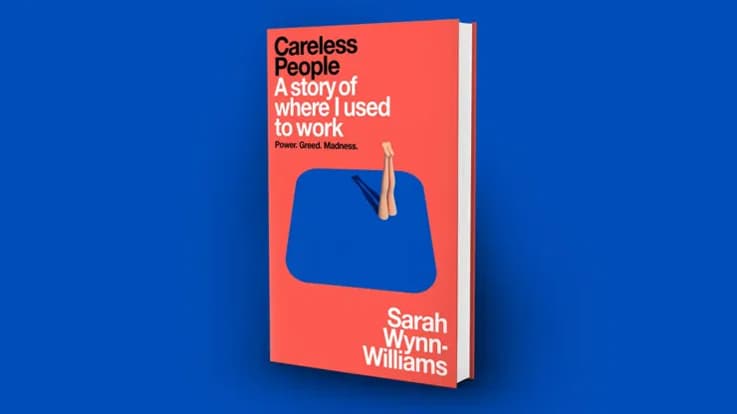
Careless People: A story of where I used to work
Sarah Wynn-Williams, Macmillan 2025.
Reviewed by Linda Manney
In recent years, a number of whistleblowers and journalists have criticized Facebook and its top executives Mark Zuckerberg, Sheryl Sandburg and Joel Kaplan (See bibliography below). More specifically, public testimony shows that Facebook executives have been indifferent to the harmful effects of Facebook policies, typically putting Facebook profit over public safety, and they are disingenuous when presenting Facebook policy to the public.
Sarah Wynn-Williams, the latest Facebook whistleblower, worked at Facebook (now a part of parent company Meta Platforms) from 2011 to 2017 as Director of Global Policy; she was first based in New York and later at Facebook headquarters, Menlo Park, California. Wynn-Williams testified before a US congressional sub-committee hearing on April 9, 2025, at great personal cost, to describe aspects of Facebook’s questionable business practice which she observed during the six years she worked at Facebook.
In 2025 Sarah Wynn-Williams published her memoir, Careless People: A Story of Where I Used to Work (Macmillan 2025), which describes how Facebook executives consistently choose to maximize their power and wealth at the expense of everyday citizens. Although a lot of what she describes has been treated in previous books or journalistic accounts (see bibliography below), Wynn-Williams’ first-person narrative provides a highly relevant point of view, as she was working at Facebook during a period when crucial decisions were being made by Facebook executives and staff which negatively impacted American interests and hurt local communities around the world.
Wynn-Williams illustrates how Facebook executives consistently reveal a lack of ethical principles to the point of siding with autocratic dictatorships. For example, in December 2014, after gaining access to the Russian market, Facebook staff approved a request made by the Russian state agency which oversees the Russian internet: Facebook staff took down a Facebook event page posted by a group planning a rally in support of Alexei Navalny for January 15, 2015, the day he was scheduled to be sentenced for a made-up crime of embezzlement (pg. 158).
Wynn-Williams shows that Facebook’s policy of growth at any cost unleased great harm to a number of countries around the world. As depicted in Wynn-Williams’ detailed accounts, Facebook’s irresponsible policies in Myanmar at the time enabled the tragic genocide in 2017 of the Rohingya Muslim minority, as hate speech, fake news and incitement to commit violence were widely circulating unchecked on Facebook at the time. Facebook executives were eager to penetrate the market in Myanmar, with the result that unofficial Facebook apps with no reporting function were being widely used at the time. As Wynn-Williams describes the situation, “Myanmar demonstrates better than anywhere the havoc Facebook can wreak when it’s truly ubiquitous. ... At every turn, when Facebook’s leaders see how Facebook is inflaming tensions and making an unstable and frightening political situation much worse, they do nothing. (pg. 346)”. Wynn-Williams later reports that “the UN report on the human rights violations in Myanmar devotes over twenty pages to the critical role Facebook played in spreading hate (pg. 358).”
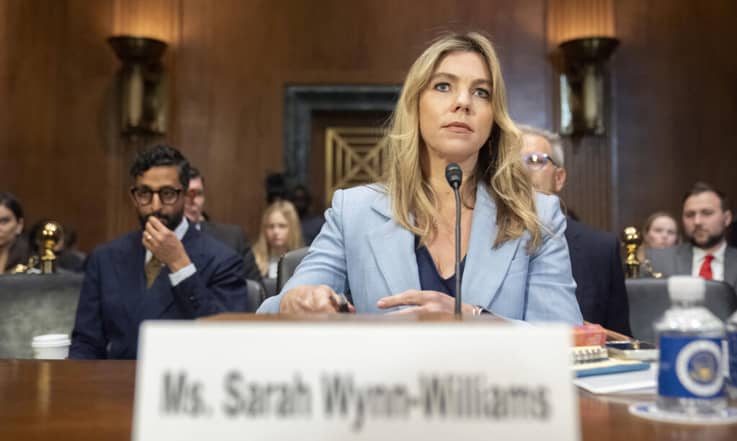
In another account of Facebook’s intensive focus on growth, Wynn-Williams explores the relationship which Facebook executives developed with the Chinese Communist Party to introduce Facebook to China. In order to gain access the Chinese market, Facebook executives worked closely with the Chinese Communist Party to develop tools for surveillance of Facebook users in China and content moderation of their Facebook posts in order to block posts that did not strictly align with official policy of the Chinese Communist Party. In her book, Wynn-Williams reviews Facebook documents which confirm that Facebook executives provided the Chinese Communist Party with “detailed explanations of precisely how the technology functions, of algorithms and photo tagging and facial recognition. All the secrets of the trade that I thought would never be revealed to anyone outside of Facebook (pg. 313).” On April 9, 2025, Wynn-Williams also provided a detailed testimony to the US Senate Subcommittee hearing on Crime and Counterterrorism, elaborating on Facebook’s crucial role in providing China with cutting edge technological advances, to the detriment of American national security and business interests. (https://www.youtube.com/watch?v=f3DAnORfgB8)
Throughout her memoir, Wynn-Williams also describes a toxic workplace environment at Facebook where sexual harassment of female staff was routine. Wynn-Williams speaks from personal experience; she reports that she was subjected to sexual harassment by her professional superior, especially after she started questioning the decisions of Facebook’s top executives. The more she pressed, the more intense the harassment became. According to Wynn-Williams, her supervisor made sexually suggestive comments, in public, about her appearance; the intensity of harassment increased during late 2015 and early 2016, when she was pregnant with her second child.
As Wynn-Williams explains, although she experienced life-threatening complications during childbirth, she was required to participate in regular video conferences with her supervisor during maternity leave. In these sessions, he would often lie in bed, rather than sit in an office setting, and often asked her intimate questions about her pregnancy and her body (pg. 246-47). On the first day she returned to work, in August 2016, the same man conducted a performance review of her work during her maternity leave, even though it was legally questionable to do so, for which he gave her an unofficial but negative review (pg. 249). When Wynn-Williams sought help from a higher-level supervisor, he was dismissive and failed to intervene (pg. 300).
During a staff meeting, when other women tried to talk about their experience of sexual harassment on the job, their complaints were also dismissed (pg. 340). In 2017, Wynn-Williams was terminated from Facebook, supposedly for performance related issues (pg. 370); her supervisor was cleared of all charges of sexual harassment against her by a Facebook internal review (pg. 368-69).
In her book-length memoir, which Facebook tried unsuccessfully to block from being published, Sarah Wynn-Williams describes the range of her experience as Facebook’s Director of Global Policy from 2011 to 2017. She also testified under oath in a US Senate Congressional Subcommittee hearing on Facebook’s role in providing technological support to China. In doing so, Wynn-Williams put her entire life, both personal and professional, in jeopardy, but she has not backed down. Indeed, Sarah Wynn-Williams has refused to be silenced, in spite of intense bullying and intimidation tactics used by powerful Facebook representatives against her.

Bibliography
Books and articles
Barnes, Julian, 2025. China Turns to AI in Information Warfare. New York Times, 6 August 2025.
https://www.nytimes.com/2025/08/06/us/politics/china-artificial-intelligence-information-warfare.html?searchResultPosition=1
Frenkel, Sheera, Nicholar Confessore, Cecelia Kang, Matthew Rosenberg and Jack Nicas, 2018. Delay, Deny and Deflect: How Facebook’s Leaders Fought Through Crisis. New York Times, 14 November 2018.
https://www.nytimes.com/2018/11/14/technology/facebook-data-russia-election-racism.html?searchResultPosition=2
Frenkel, Sheera and Cecilia Kang, 2021. An Ugly Truth: Inside Facebook’s Battle for Domination. Harper/HarperCollins Publisher.
Haugen, Frances, 2023. The Power of One: How I Found the Strength to Tell the Truth and Why I Blew the Whistle on Facebook. Little, Brown & Company.
Isaac, Mike, 2016. Facebook Said to Create Censorship Tool to Get Back Into China. New York Times, 22 November 2016.
https://www.nytimes.com/2016/11/22/technology/facebook-censorship-tool-china.html?searchResultPosition=1
Mozur, Paul, 2017. In China, Facebook Tests the Waters With a Stealth App. New York Times, 11 August 2017.
https://www.nytimes.com/2017/08/11/technology/facebook-china-moments-colorful-balloons.html?searchResultPosition=1
Tufekci, Zeynep, 2016. Mark Zuckerberg Is in Denial. New York Times 15 November 2016.
https://www.nytimes.com/2016/11/15/opinion/mark-zuckerberg-is-in-denial.html?searchResultPosition=1
Wynn-Williams, Sarah, 2025. Careless People. A story of where I used to work. London / Dublin: Macmillan.
Videos
Congressional Sub-Committee Hearings with Facebook whistleblowers as key witnesses
Frances Haugen, 2021. Testimony provided to the United States Senate Committee on Commerce, Product Safety and Data Security, Sub-Committee Hearing on Consumer Protection, Product Safety and Data Security, October 4, 2021: Protecting Children Online.
https://www.youtube.com/watch?v=GOnpVQnv5Cw
Arturo Bejar, 2023. Testimony provided to the United States Senate Subcommittee Hearing on Privacy, Technology, and the Law, November 7, 2023: Social Media and the Teen Mental Health Crisis.
https://www.youtube.com/watch?v=ZPZM2ABzM-M
Sarah Wynn-Williams, 2025. Testimony provided to the United States Senate Subcommittee on Crime and Counterterrorism, April 9, 2025: A Time for Truth: Oversight of Meta’s Foreign Relations and Representations to the U.S. Congress.
https://www.youtube.com/watch?v=f3DAnORfgB8