


Across the US, May 1, 2026, is being recognized with strikes and rallies, or at least private restraint from work, school, or shopping. It's not, perhaps, on the level of May Day abroad, where it's a major civil holiday. The US has long recognized Labor Day on the first Monday in September. Why? More on that later.
Why Americans are out in the streets this year, along with the rest of the world, may be summarized in Thom Hartmann's post for the day. Highlighting a major turn in the Maine race for US Senate, he adds a summary of:
- what Dems lost in triangulating to the right,
- what Americans got instead when they voted for tough-talking Republicans
- and perhaps most importantly, what the Congressional Progressive Caucus offers in its roll-out of the New Affordability Agenda.
But how did we get where we got before we lost it? Start with Haymarket.
Haymarket
NextGen America sent out this brief reminder of why May Day is for more than just picking posies.
On May 1, 1886, more than 300,000 American workers walked off the job in the first-ever May Day. It was the culmination of years of labor organizing that demanded an 8-hour work day (at a time when many workers were putting in 10-16 hours every day) and safe working conditions.
The first May Day marches, heavily centered in Chicago, were peaceful… until police and Pinkertons (the forerunners to the Secret Service) began to harass and beat workers. On May 4, things escalated and turned tragic in the Haymarket neighborhood when a bomb was thrown.
The state went after the people who led the workers, executing four of them, and a fifth died by suicide, even though none of them could be tied to the bombing itself.
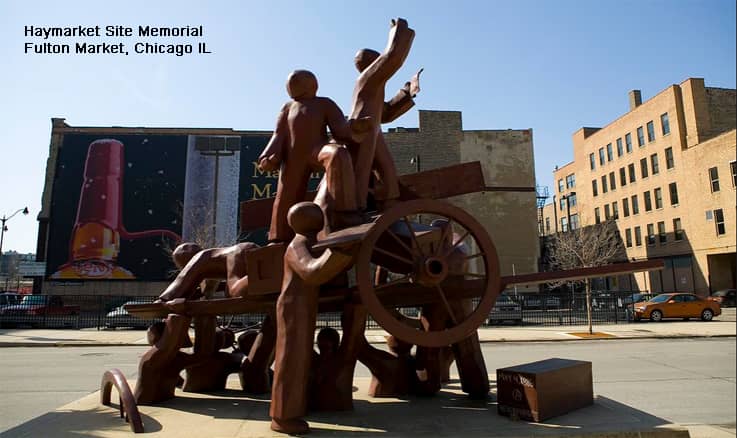
Today, the Haymarket Martyrs' Monument in Forest Home Cemetery and the Haymarket Memorial in Chicago stand as symbols for the right to assemble, to free speech, and workers’ dignity.
The May date was adopted by workers' organizations around the world. But in the US? Well, some thought it was too 'red,' read: left-leaning, back in the day.
According to The Contrarian, the "call for an economic slowdown/shutdown this year first sounded in Minneapolis" by May Day Strong organizers, hoping to bring people together in common purpose. Another form of protest in the resistance toolkit.
Read On
Christopher Armitage says Don't Do This To Amazon On May Day, a playful jab at circumventing local objections to plaster striking sites with encouraging flyers, before settling into a description of the 1892 Homestead Strike in Pennsylvania. The workers lost. But they stuck it out for 12 days anyway. Because -- and this is the point -- it was the right thing to do!
The European Correspondent, one of our newer finds (and TKS, Doris M, for this one!) has been dishing up some valuable reporting. Their entry for May 1, "International Workers Day" is first up in this edition. It explores the costs to workers when public services are contracted out to private firms.