


GERRYMANDERING
Gerrymandering, a word you probably first learned in high school social studies class, is alive, and (ahem) well. At least that’s how the GOP would have it.
But in an affront to an earlier power grab in Michigan, a panel of judges have recently ordered new elections in several state-Senate districts, having citing nearly 30 electoral maps as unconstitutional.
And there is more good news: four states have passed acts in November 2018 to end gerrymandering.
A QUICK REFRESHER
Gerrymandering is the illegal process of modifying congressional districts to overwhelmingly benefit the party in power. It’s achieved through diluting or concentrating the opposing party’s voting power: cracking or packing, respectively.
And it yields some very funky-looking electoral district maps.
The majority of redistricting plans are drawn by state legislatures, with many subject to final approval by the state's Governor. 2021 redistricting, or redrawing, of the electoral district map in each state will be based upon the 2020 census.
DON’T BOO. VOTE.
That’s why the most critical battlefields in 2019 and 2020 lie at the ground level in the state legislatures, where control of one or both chambers will determine the shape of future congressional districts.
In Virginia, for example, Democrats hope to turn the state blue this fall by flipping the State Legislature.
So, once again, it’s not just about the national elections, but what happens in between, too.
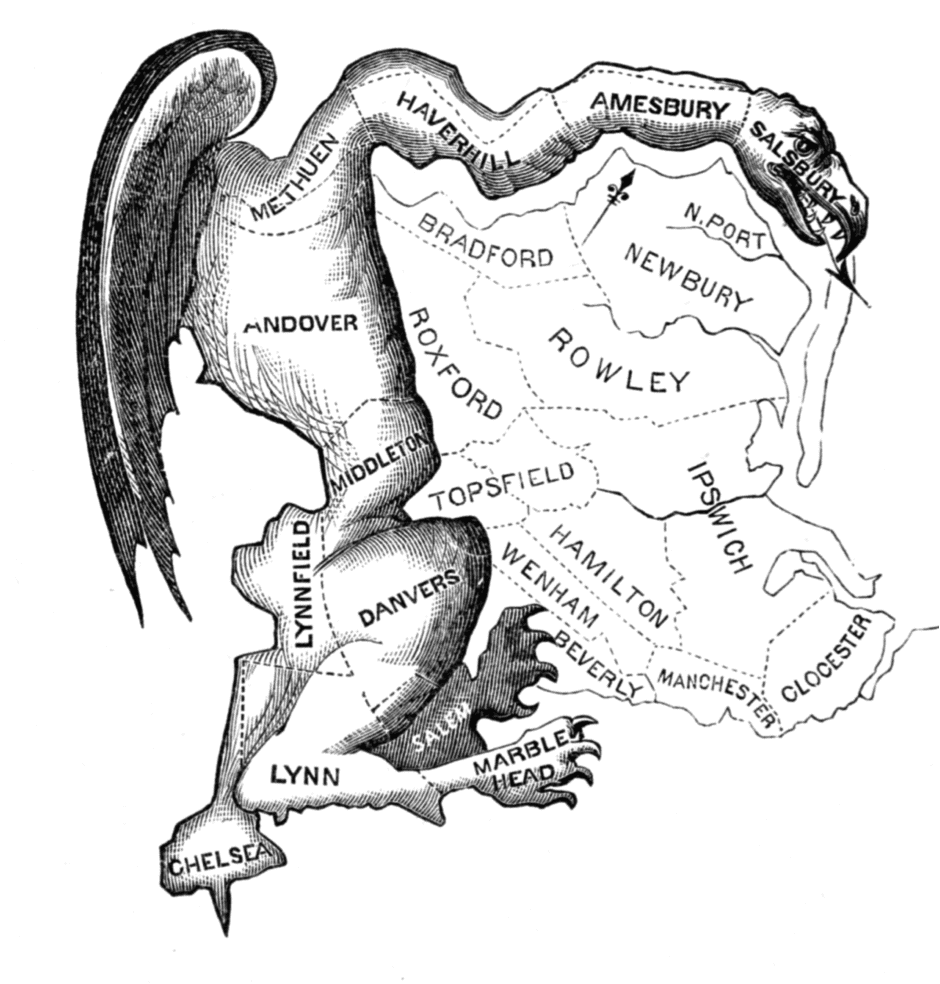
Source: Original cartoon of "The Gerry-Mander", this is the political cartoon that led to the coining of the term Gerrymander. The district depicted in the cartoon was created by Massachusetts legislatureto favor the incumbent Democratic-Republican party candidates of Governor Elbridge Gerry over the Federalistsin 1812.
#VoteThemOut #BlueWave2020 #VoteBlue