


By Naomi Banuelos-Lozano
"How do you love a state that does not love you back?"
Growing up in the red state of Texas, I have always carried with me a conflicting sense of pride. When asked "Where are you from?" I already know I will have to dispel some preconceived notions people will have of me by being from a gun-loving, oil-fracking state. But I refuse to change my answer, because it is important that people know that Texas also looks like me: a multilingual, Democrat-voting, queer daughter of immigrants. And thanks to the blue wave across the nation, it looks like more people are starting to see how diverse Texas voters can be, and how important it is for us to see ourselves and our values represented in congress. It is crucial, however, that we do not let identity politics keep us from holding elected officials accountable, no matter the party alignment.
The 2026 Midterms rocked a country who collectively shared frustrations with the Trump administration and its abysmal disconnect from the average American with immediate concerns regarding the cost of living and the defunding of public services for wars perpetuated by foreign governments. But for Democrats in Texas and other flipped states, this blue tsunami was the long awaited outcome after decades of community building and outreach across multiple generations living under the control of republican lawmakers and judicial courts. Every head at a protest, every rallying voice for justice, and every voter that showed up at the polls formed a drop in a blue tsunami we Texans only thought amounted to a couple of pools in major cities, the same cities minorities like myself would flock to for some sense of freedom and protection. Loving one's home includes caring enough to fight for a change, so that yourself, your neighbors, and future generations do not have to leave their hometown to feel safe.
"When will I feel safe enough to go back home?"
As a young Democrat living abroad, the national blue tsunami solicited from me a surprised gasp, a sigh of vindication, and a held breath of hesitation. There are many factors that still make me anxious when I think about the future of my home state and country:
1. How will the Democratic majority combat corruption by the 1% and foreign interests?
2. What will happen to our rural communities if the country continues to be an unregulated AI playground for data centers?
3. Will bipartisanship take priority over taking immediate action against state violence from police or ICE agents?
4. What will it take for more states to pass legislation protecting reproductive health rights or marriage equality?
Most importantly, I fearfully wonder about my fellow voters: will we lose this momentum to complacency? I recall my college years and a conversation with someone who grew up in a blue state and genuinely believed the 2016 election was a temporary blip as "the future can only become more progressive." This assumption takes for granted the efforts of volunteers like myself that have registered hundreds of new voters and organized phone banking in support of local democratic campaigns, or my best friend who travelled across rural Iowa in the summer on foot to campaign for his preferred democratic primary candidate for president, or my former colleague who started an online political awareness group in support of causes that matter to our border town community. It's an insult to the continued work by figures like former congressman Beto O'Rourke, who upon losing his presidential and senate race continued to rally young people around important causes and local democratic candidates. Despite not appearing on a ballot since 2019, his continued efforts with communities all over Texas paved the way for a record voter turnout and Democratic win for James Talarico and Gina Hinojosa in the Senate and gubernatorial elections.
It took all of us to care, speak out, and vote to create this blue tsunami. While we try to learn how to swim in it, we cannot afford to stop adding our drops to keep this wave from drying out.
###
| Naomi is a native Texan who grew up in the Rio Grande Valley, just 15 minutes from the Mexican-American border. She is studying Migration and Human Rights and enjoys international cuisine, video games, travel, and seeing her home country through the eyes of her Greek partner. | 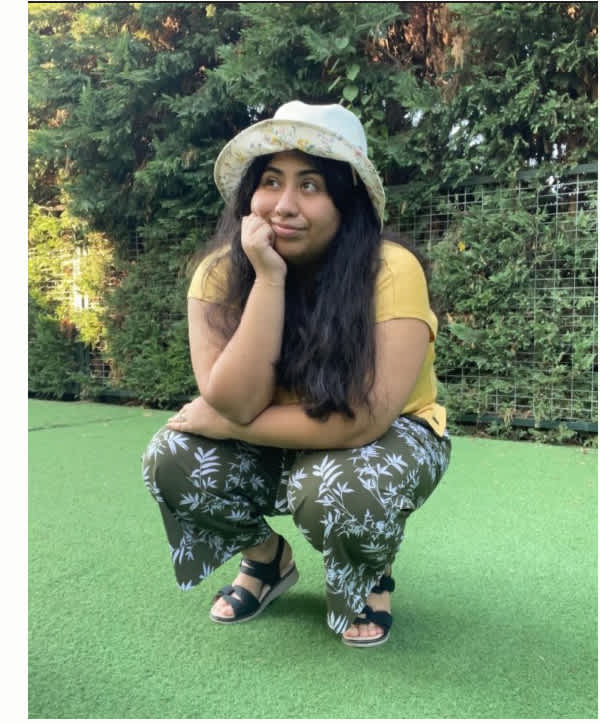 |