


The decision not to vote for Trump may be influenced by concerns about his attempts to undermine democracy, ongoing legal issues, divisive leadership, handling of the pandemic, and policies that some see as harmful to the country’s social fabric, environment, and global standing. These factors contribute to arguments that Trump’s return to office would further deepen divisions and weaken key institutions both domestically and internationally.
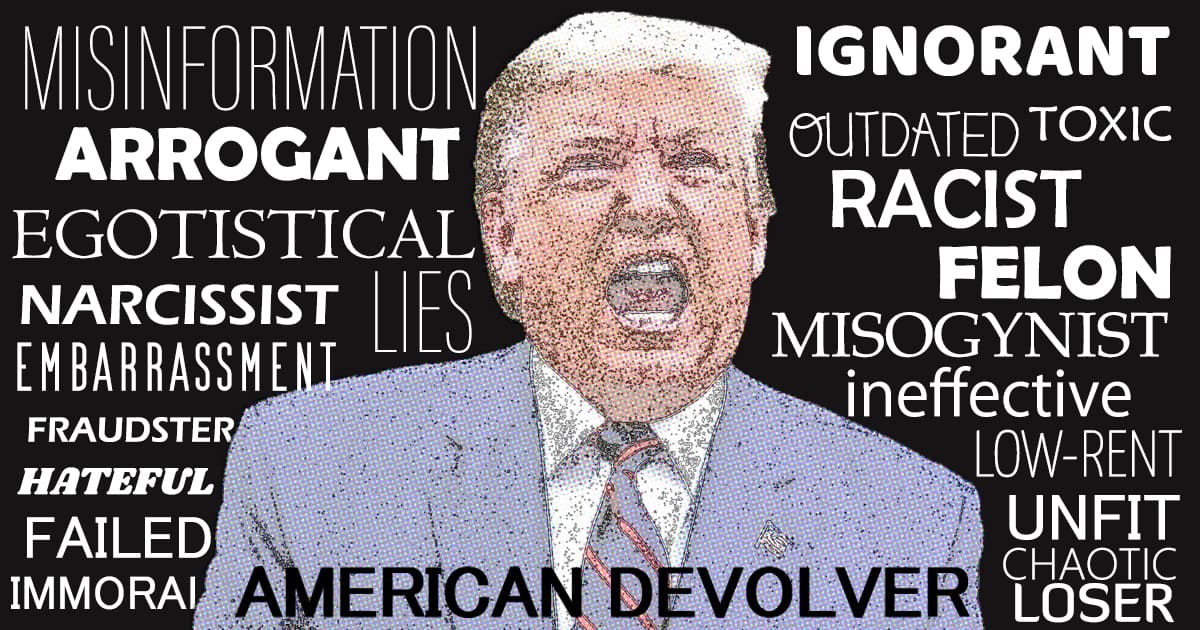
Reasons not to vote for Donald Trump in the 2024 election are often based on concerns about his leadership style, policy positions, and behavior during his previous term as president. Here are some key arguments against voting for Trump:
1. Undermining Democratic Norms:
- Attempts to Overturn the 2020 Election: Trump’s refusal to accept the results of the 2020 election, and his role in spreading baseless claims of widespread voter fraud, led to the January 6th Capitol riot. Many critics argue that his actions threatened the peaceful transfer of power and undermined democratic institutions.
- Attacks on Institutions: Trump has a history of attacking the judiciary, law enforcement, and the free press, labeling any criticism as "fake news" or part of a conspiracy against him. This pattern of undermining trust in institutions could have long-term consequences for democracy.
2. Legal and Ethical Issues:
- Multiple Legal Troubles: Trump faces multiple criminal indictments, including charges related to election interference, mishandling classified documents, and fraud. Critics argue that having a candidate with such significant legal issues could further erode public trust in government.
- Conflict of Interest and Ethics: During his presidency, Trump was criticized for conflicts of interest, such as his refusal to fully divest from his businesses. His administration faced multiple allegations of corruption and self-dealing.
3. Divisive and Polarizing Leadership:
- Inflammatory Rhetoric: Trump’s frequent use of inflammatory, racially charged, and divisive language exacerbated tensions across the country. His approach often deepened political, racial, and cultural divides, contributing to a more polarized nation.
- Handling of Social Issues: His rhetoric and policies often alienated marginalized communities, with critics pointing to his response to events like the Charlottesville white nationalist rally, where he stated there were “very fine people on both sides,” as indicative of his failure to condemn hate and bigotry.
4. Foreign Policy Concerns:
- Strained Alliances: Trump’s foreign policy often prioritized nationalist approaches over long-standing international alliances. He was criticized for alienating key allies (like NATO countries) and for his cozy relationships with authoritarian leaders such as Vladimir Putin and Kim Jong-un.
- America’s Global Standing: Many argue that Trump’s "America First" approach damaged the U.S.’s global reputation, weakened international cooperation, and left the country more isolated on key issues like climate change and global security.
5. Handling of the COVID-19 Pandemic:
- Misinformation and Response: Trump’s handling of the COVID-19 pandemic drew widespread criticism. His downplaying of the virus, promotion of unproven treatments, and inconsistent messaging contributed to confusion and undermined public health efforts. Critics argue that his administration’s response was a significant factor in the high death toll and economic disruptions.
6. Economic and Policy Concerns:
- Tax Cuts Favoring the Wealthy: The 2017 Tax Cuts and Jobs Act, one of Trump’s signature legislative achievements, disproportionately benefited corporations and the wealthy. Critics argue that the policy exacerbated income inequality while failing to deliver the promised benefits for the middle class.
- Environmental Deregulation: Trump’s rollback of environmental protections and withdrawal from the Paris Climate Agreement were widely condemned by climate scientists and activists, who argue that these actions set back efforts to combat climate change and protect the environment.
7. Behavior and Temperament:
- Lack of Presidential Demeanor: Critics often point to Trump’s erratic behavior, frequent use of insults and name-calling, and lack of decorum as evidence that he lacks the temperament to be president. His impulsive decision-making and disregard for expert advice were also sources of concern during his time in office.
- Disrespect for Allies and Officials: Trump’s frequent attacks on allies, officials within his own administration, and even members of his own party, demonstrated a governing style that was often chaotic and marked by infighting.
With only focusing on Trump's ideals and direction, and not understanding the real common struggles of ALL Americans outside of his world, nothing will change for the better. When a person is facing personal issues with their health along with complicated criminal implications for their wrong-doings, this person cannot manage themselves well let alone a country!

 Follow Democrats Abroad's Yucatan Chapter on Facebook!