


❤️ A Care Package for the Folks Back Home
Practical information, encouragement — and a few things worth smiling about — to share with friends and family in the U.S.
There is a lot happening around voting right now, and it can be difficult to know what matters, what has actually changed, and what to do next. This page gathers useful, reliable resources you can pass along to people back home.
1. How Democracy Is Being Defended
Most of us hear much more about the attacks than we do about the people stopping them.
Across the country, states, courts, election officials, voting-rights organizations and ordinary citizens are challenging unlawful actions, protecting voters and winning important victories.
Just in the past few days:
MISSOURI — Citizens fought for their right to vote on a new congressional map. More than 300,000 Missourians signed petitions demanding a referendum, and the Missouri Supreme Court unanimously ruled that the Trump-backed map cannot be used in November unless voters approve it. Missouri has appealed, so the fight continues.
MAIL BALLOTS — States and voting-rights groups stopped new USPS ballot restrictions for November. Judge Indira Talwani blocked implementation of the rule, finding that challengers are likely to succeed in showing that it is unlawful.
BIRTHRIGHT CITIZENSHIP — The courts again said no. A federal judge blocked the administration's latest attempt to restrict birthright citizenship, finding the new executive order almost certainly unconstitutional.
And that's far from all. In recent weeks, courts and citizens have also stopped or challenged attempts involving voter rolls, proof-of-citizenship requirements, voter purges and citizenship checks.
Some remedies come quickly. Others take months of litigation, appeals, organizing and persistence. Sometimes there are setbacks along the way.
Don't confuse an attempted action with a successful action — on either side.
The system isn't defending itself. People are defending it.
And you can be one of them. Keep reading for ways to protect voters, help someone vote and share reliable information.
2. Watch the Road to November Town Hall
Start with the Road to November Town Hall for a clear overview of voting from abroad, the protections available to overseas voters, and the people and organizations working to protect the vote.
Watch the Town Hall video and view the slides.
3. A Musical Voter-Protection Break 🎵
HOW TO MAKE VOTING SAFER — by the Resistance
“Elections are made safer by truth and participation.”
A satirical country parody offers a few refreshingly simple election-security tips: skip the armed troops, bubble wrap and seatbelts in voting booths; count every legal ballot, respect election workers, demand evidence and stop treating defeat as fraud.
It is a funny protest song about voter intimidation, misinformation and attacks on free and fair elections — because the safest thing for democracy may simply be learning how to lose.
4. Help Protect the Vote
People across the country are volunteering to help voters, observe elections, answer questions, cure ballots and make sure eligible voters can cast a ballot and have it counted.
Democracy Protectors and other voter-protection programs give people concrete ways to help. Share these opportunities with friends and family who want to do something useful.
Something for the kids — or the grown-ups with crayons. 😁
Democracy needs defenders — and overseas voters have some pretty impressive super powers. Download and share the Democracy Defenders and Our (Overseas Voters) Super Powers coloring pages.
TO DOWNLOAD PRINTABLE COLORING PAGES
CLICK LINKS BELOW THE CARTOON IMAGES
|
|
|
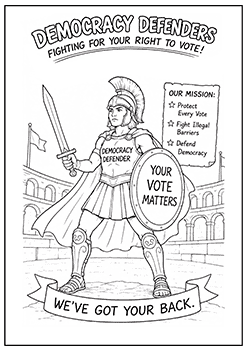
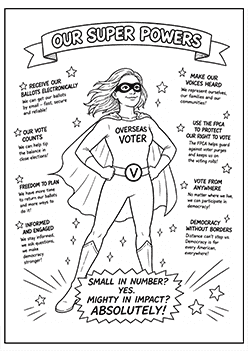
DEMOCRACY DEFENDERS • OVERSEAS VOTERS SUPER POWERS
5. Reliable Voting Help to Share
For friends and family who need practical voting help, share reliable resources for registration, ballot information, deadlines and state-specific rules.
IWillVote.com — The Democratic Party's voter-information hub: registration, voting options, deadlines, polling places and state requirements.
Vote.org — Easy nationwide tools to register, check registration, vote by mail, track a ballot and find voting locations.
VOTE411.org — Nonpartisan state and local election information, including what's on your ballot.
Can I Vote? — Find state election information about registration and voting requirements.
State and local election offices — Official information about registration, voting methods, deadlines and local election procedures.
Election Protection — Nonpartisan voter assistance for people who encounter voting problems or need help understanding their rights.
6. And Now, Something to Sing in a Long Voting Line… 🎶
Share this video with U.S. friends so they can sing it in long voting lines!
The Raging Grannies
“What Shall We Do with a Useless Congress?”
WATCH THE VIDEO — then pass it along to somebody who could use a laugh and a reminder to vote.
Want to sing along? The full lyrics — plus more election-season fun — are in The Lighter Side.
7. Pass It On ❤️
You do not have to solve everything.
Share one useful resource. Help one person find an answer. Encourage somebody to register, request a ballot, volunteer or vote.
Action alleviates anxiety.
VOTE
For people in the States:
- IWillVote.com — Democratic Party voter information and voting tools
- Vote.org — registration, registration checks, mail voting, ballot tracking and polling locations.
- VOTE411.org — nonpartisan state/local information and what's on your ballot, from the League of Women Voters Education Fund.
For Americans living overseas:
HELP SOMEONE VOTE
Help U.S. friends and family get the voting information they need.
See Section 5 above: Reliable Voting Help to Share.
VOLUNTEER
Help protect voters and elections where you live in the U.S.
Volunteer to Protect the Vote
STAY INFORMED
Follow reliable information about voting, voter protection and what's happening in your community.
Get reliable voting information and updates.
Democratic Party — Voter Protection & Registration
League of Women Voters — Elections
Note: the Democratic Party page above also includes its voter-assistance hotline, 1-833-DEM-VOTE, and voter-rights information.
Share useful information with friends and family — especially when confusion or misinformation is circulating.
Find more cartoons, music and election-season silliness in The Lighter Side .