


Last month, we asked the Democrats Abroad community to share your remembrances of September 11, 2001, in advance of the 25th anniversary. You wrote to us from Casablanca and Manchester, from Melbourne and Prague, from around the globe. Some of you were children on 9/11, while others were already an ocean away from home. Some of you watched the towers fall from a few blocks south of the attack, and some of you learned what happened from a radio at an antique fair on the other side of the Atlantic.
Twenty-five years later, here is what you shared about that day that altered the course of history.
Where we were
That morning, our community was scattered across the globe, from tiny Chelan, Washington, to bustling Johannesburg, South Africa. Some were in Manhattan, while others were spread across small towns and cities most of the country would never think to connect to that day, like Moline, Illinois, Bay St. Louis, Mississippi, and Canal Winchester, Ohio.
One member was in Chinatown. "I'll never forget how New Yorkers came together that day," she wrote. "We were one."
Marta was crossing the Verrazano Bridge on her way to work in Brooklyn. She lost two firefighter friends that day.
Bonnie was in Johannesburg with her infant son, watching it unfold on South African television because there was no other way to see it yet. Her cousin, a fire chief in lower Manhattan, lost members of his crew. "My husband said it was probably as safe then as it would ever be," she wrote, "given the newly heightened security measures."
Karim was aboard a research vessel off the coast of Norway, working alongside Norwegian colleagues who stopped everything to watch the second plane hit, open-mouthed, alongside him.
Mimi had moved from the DC area to the Netherlands just two weeks earlier. Her television didn't have English news. She read the lists of the missing online through a dial-up connection and found two of her classmates among them, both helicopter pilots serving at the Pentagon.
One member was distributing campaign literature at his polling place for that morning’s mayoral primary, a few blocks from the World Trade Center, when he saw the first plane fly overhead and hit the North Tower. He went home to watch the rest unfold on television, and didn't fully believe the towers were gone until he went outside and saw the skyline himself. Days later, his Tribeca block sat inside the evacuation zone: masked neighbors, construction convoys, checkpoints where he had to show ID just to get home. For him, the day marked “a critical turning point for the US and the world; in some ways a loss of innocence or faith.”
And Pamela was on the phone in a hotel room on Madison Avenue when the second plane hit the second tower. The hotel's cleaning woman came in to make up the room while it was still on the television. Her husband was a janitor in one of the towers. She hadn't been able to reach him.
The fear for the people we knew and loved
For many who shared, the hardest part of that day wasn't what you saw, it was not knowing whether the people you loved were safe.
Tim was on the trading floor at Rockefeller Center when the towers fell. His friend Beth worked for Windows on the World, the restaurant in the North Tower, ten floors above where the first plane hit. She survived, evacuated by boat to New Jersey, and later attended dozens of funerals for coworkers who didn't. His friend Phil was never found.
Liz wrote about her sister, who worked on the top floors of the North Tower for a financial firm and had been laid off the afternoon before the attack. She survived, though her life was forever changed. Her boyfriend, and nearly all of her colleagues, died. Liz was in South Africa, in the years before cell phones and email were common. Phone lines were jammed that day. She didn't know her sister hadn't been at work and it was only late that night, from public telephones at a mall, where news and video of the towers was still playing on large screens in the food hall, that she finally spoke directly with her sister and was able to confirm, "You're alive!" She was alive but the losses were heavy.
Michael was getting ready for work in Moline, Illinois when he heard the Pentagon had been hit. Both his mother and stepfather worked there, but they were, thankfully, in different parts of the building and physically safe from the attack.
Caroline, a New Yorker living in England, spent the weeks after the attack scouring newspapers for the names of the dead, recognizing some of them. She flew back to Ground Zero that October to pray for the people she'd lost.
What it set in motion
For some of you, that morning didn't just mark a tragedy. It marked the start of something bigger than any one person or day.
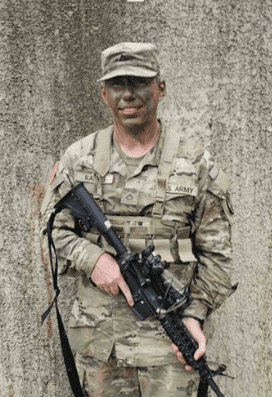
Carl, who served three years in the Army, described the day with three meaningful words: courage, hope, resilience.
Michael's nephew, Jacob, enlisted in the Army Reserves after 9/11 and is still serving today.
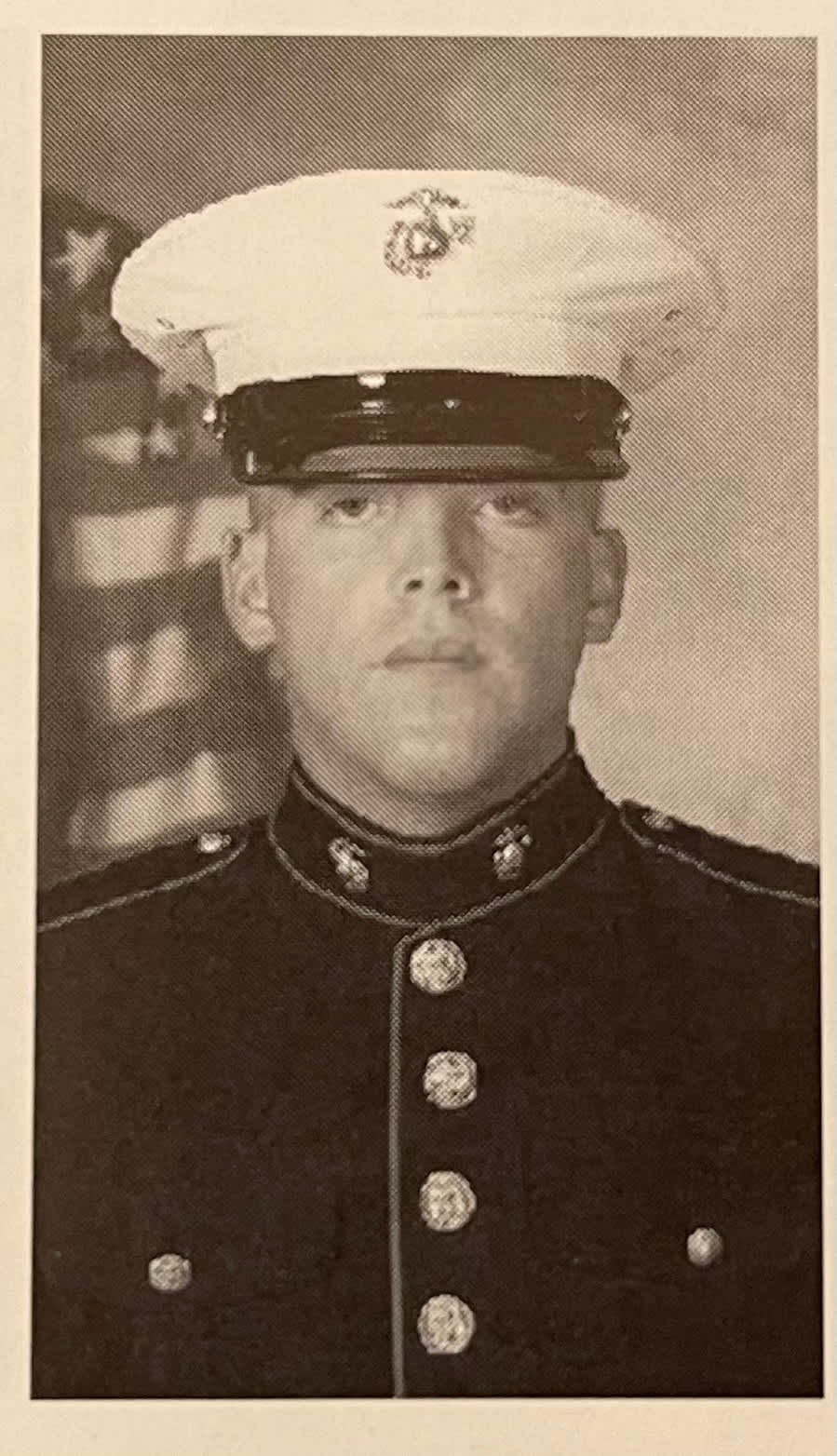
VMF Caucus Co-Chair Stephen was in college, focused on his degree, with no plans to join the military. "That single day changed the course of my life," he wrote, "and set me on the path to serve after graduation." He went on to serve in the Marine Corps.
Our memories
Glad was in Rochester, New York. "I looked at my husband to be," she wrote, "and asked: are we at war?"
Chris was at the U.S. Department of Labor's regional office in Philadelphia; his team gathered in the conference room to plan how to respond; eventually, he stayed behind so others could get home.
One member watching from Bay St. Louis, Mississippi responded in a single word that resonates with so many of us as we think about that day: vulnerability. Another, watching from the Colorado mountains, wrote that it was the first real attack on U.S. soil in their lifetime, and that they felt a vulnerability they hadn't felt before. And one member on the way to work in Woodland Hills, Los Angeles, put it simply: “Everything changed.”
Maeve spent the day at her office on Central Park West, seeing the patients who came in and taking calls from those who couldn't. "It was perhaps the busiest day of my life as a doctor," she wrote.
Marisa was on the Lower East Side, and wrote that she watched her city come together in fear, anger, and sadness: "the smells, sounds and feeling will always remain etched in my mind, although it is less painful now."
Another member was in a Brooklyn apartment that morning, packing for a long-planned move to London. The last two weeks they spent in New York, they wrote, made them feel like "a traitor for leaving."
Carrie put the day in three words: horror, disbelief, sadness. Another member at work in London that morning gave three words of their own: shock, fear, compassion.
One member working at Oxford University Press wrote that a vigil the university held days later, with colleagues of every nationality gathered in silence, made being so far from home a little easier to carry.
Another member wrote that the world's outpouring of support in the days after 9/11 was astonishing, but that the years that followed revived “an ugly anti-immigrant attitude so prevalent now.” One member wrote that even now, a nephew whose father is from the Middle East still faces harassment from a neighbor: the prejudice 9/11 unleashed, they wrote, is still surfacing today.
Christa was just eight years old in Bremen, Germany; it would be years, she wrote, before she came to understand what she'd seen in her parents that day, or the shape it would give U.S. foreign policy for decades after.
And Garet called it simply "the end of an era of feeling safe in this world."
The long trail of impact
Some of you are still carrying what that day cost you in ways that don't show up in the news coverage.
Jay filmed Ground Zero from the day of the attack through January 2002, largely without a mask. In 2015, he was diagnosed with a rare sarcoma linked to that exposure and later had part of his foot amputated. He’s still monitored at Bellevue Hospital, alongside more than 120,000 other New Yorkers with rare cancers tied to that toxic exposure. "We are from all walks of life, ethnicities, races, countries," he wrote. "I love the people I meet there. It is the World Trade Center medical and support staff and the civilian cancer veterans from the 9/11 attack that make me proud to be an American."
Todd still carries the trauma in his sleep, twenty-five years on. His feelings attached to the day: alienated, mistrust, hypervigilance.
Michelle lost her studio, one block from the towers, and her work still sits in storage more than two decades later. "There is no going back," she wrote. “All my works were covered in 9/11 dust. It destroyed my entire life.”
Unity, then and now
More than one of you wrote about the way the country came together in the days after 9/11, and about how far that feels from where we are now.
One member described the pride they felt watching the country face “the darkness with light.” "Twenty-five years ago we showed what America is at its best," they wrote. "Today we are showing what America is at its worst." They closed with a line from President Abraham Lincoln: that if destruction is ever our lot, we must be its own author and finisher.
Matthew, who volunteered at a blood donation center in the days after the attacks, wrote that the togetherness the country showed then "is but a memory" now, and that the United States could go much further if it found that unity again, "not divided or polarized."
Where we are now
The same community that was once scattered around the globe on that fateful morning continues to represent around the world: the United Kingdom, Morocco, Germany, Portugal, Spain, Australia, Albania, Czech Republic, Italy, Switzerland, the Netherlands, and Canada.
Many of you didn't leave the US until years after 9/11. For our veterans and military-connected families, that day marked the start of two decades of deployments, homecomings, and in many cases, loss. Our VMF community has carried that weight longer than most. And now, those wounds are being opened again. The Trump administration's illegal and irresponsible push into another foreign conflict, with even less justification and even less planning than we saw in the chaotic years after 9/11, is a reminder that we haven't learned the lessons paid for in blood and grief.
Whatever brought each of us abroad, we're all watching the same country make the same mistakes, and that's exactly why this community exists: not to look away, but to stay together to fight for something better.
What we're carrying from that day
Asked for three words to describe the feelings around 9/11, this community reached for the same handful, over and over: sadness, fear, shock, disbelief, horror, grief, anger, confusion. But scattered in among those painful feelings were other core values we hold dear: service, patriotism, resolve, humanity, community, compassion, courage, hope, resilience.
Twenty-five years later, this community still carries what that day cost us in ways big and small. Thank you for trusting us with your stories as we commemorate this milestone anniversary of a day that changed us all forever.