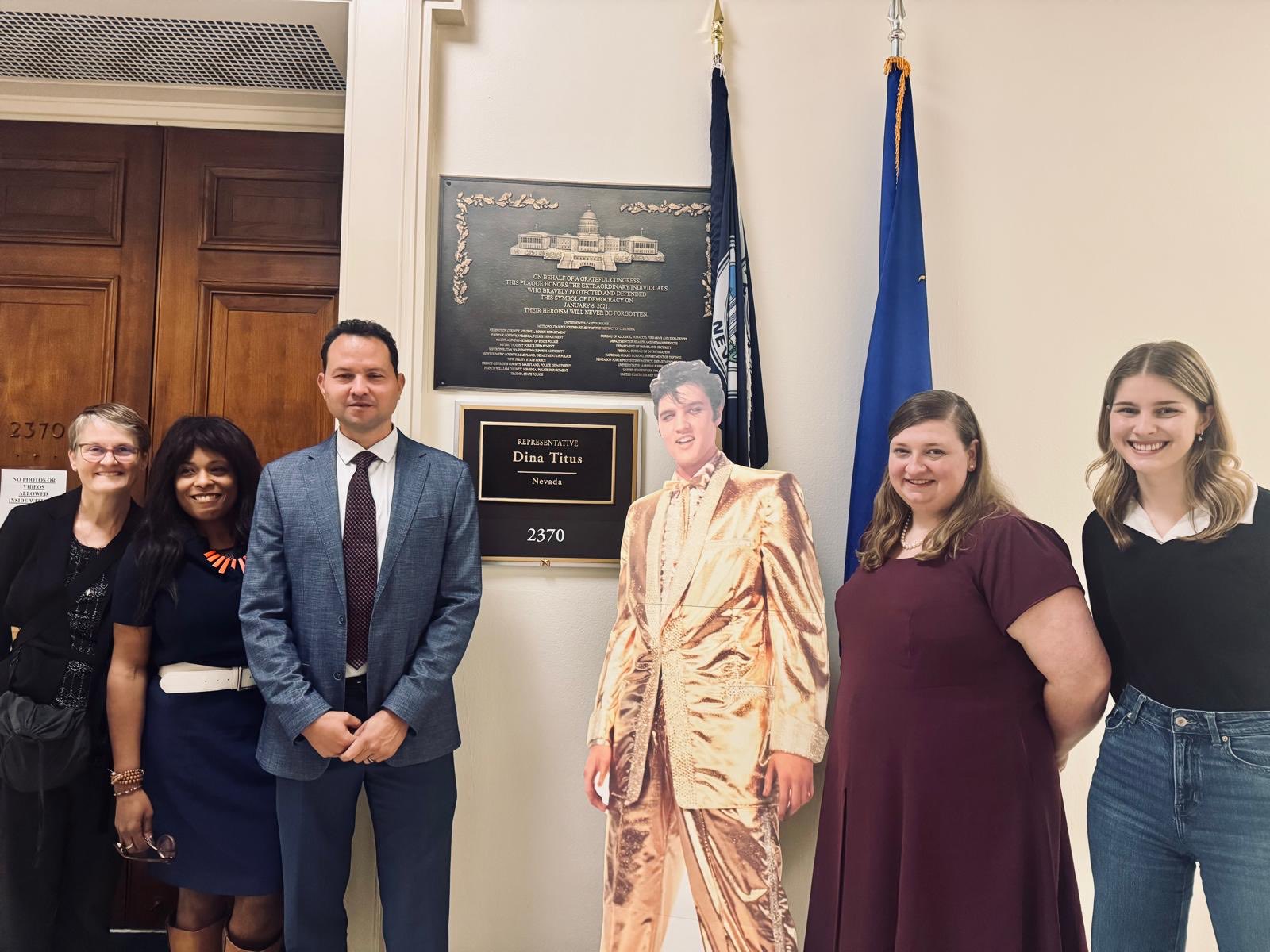
The 2026 midterm elections are approaching, and this is an opportunity for Americans abroad to make sure their representatives in Congress hear directly from constituents living overseas.
The Residence-Based Taxation for Americans Abroad Act was originally introduced as H.R. 10468 in December 2024. The proposal would create an elective residence-based taxation system for qualifying Americans living outside the United States.
Work has continued on revised legislation for reintroduction in Congress.
If Residence-Based Taxation is an issue you care about, you can contact your House representative and U.S. senators and let their offices know your views.
STEP 1: FIND YOUR HOUSE REPRESENTATIVE’S PHONE NUMBER
- Click here and search for your last U.S. address, your U.S. voting address, or your parents' last U.S. address, if you have never lived in the U.S.
- Note their Washington D.C. phone numbers (area code 202).
STEP 2: CALL THEIR OFFICE
When the receptionist answers, introduce yourself as a constituent living abroad and explain that you are calling about the Residence-Based Taxation for Americans Abroad Act.
For example:
“Hi, my name is [name], and I am a constituent from [your hometown/voting city] currently living in [your abroad country]. I’m calling to ask Representative [your rep's name] to co-sponsor the Residence-Based Taxation for Americans Abroad Act when it’s reintroduced.”
You can then briefly explain how the current U.S. tax system affects you personally and what you would like your Representative to know and do when the legislation is reintroduced.
Conclude the call by asking for the person's name and email address. Send a polite follow-up email to the person after you speak with them saying the following:
“Thank you for your time speaking on the phone just now. As discussed, I would appreciate it if you could ask Congress[wo]man [your rep's name] if they will co-sponsor the Residence-Based Taxation for Americans Abroad Act. This bill will be life changing for me and the 9 million Americans living abroad. I will follow up again in a week if I've not heard from you before then.”
Be sure to set a reminder to follow up with the person you spoke to the following week. We see a huge increase in success with people sending follow-up emails after a phone call.
TIPS
- Call during Washington, D.C. office hours, normally weekdays between 9 a.m. and 5 p.m. Eastern Time.
- If no one answers after several attempts, leave a voicemail if available and try again a few days later.
- Keep your message short. Congressional staff do not expect you to be a tax expert.
- Your personal experience is often the most useful information you can provide.
STEP 3: CONTACT YOUR U.S. SENATORS
You can also contact the two U.S. senators who represent your voting state.
Find your senators at Senate.gov and note the Washington, D.C. phone number for each office.
When you call, introduce yourself as a constituent from their state who is currently living abroad and explain that you are calling about the Residence-Based Taxation for Americans Abroad Act.
Many Senate offices route calls directly to voicemail. If you do not reach a staff member, please leave a voicemail rather than hanging up. A short message is enough.
For example, you can leave this voicemail:
“Hi, my name is [name]. I’m a constituent from [your voting state] living in [your abroad country]. I’m calling to ask Senator [name] to sponsor the Residence-Based Taxation for Americans Abroad Act when it is introduced in the Senate. My phone number or email is [contact information].”
You can then briefly explain how the current U.S. tax system affects you personally. If you would like the Senator to support the legislation when it is introduced in the Senate, say so clearly and ask the staff member to pass your request along.
As with your House Representative, ask for the name and email address of the staff member handling tax policy so you can follow up in writing.
STEP 4: TELL THE TAXATION TASK FORCE WHAT YOU HEARD
If you contact your House representative or senators, you can email the Democrats Abroad Taxation Task Force and tell us which offices you contacted and what responses you received.
If the office sends you a written response, please forward it to us as well.
Knowing which House and Senate offices are hearing from constituents and what those offices are saying helps the Taxation Task Force understand congressional views on Residence-Based Taxation.
STEP 5: CONTACT YOUR REPRESENTATIVE AND SENATORS ON SOCIAL MEDIA
You can also contact your House Representative and senators through their public social-media accounts.
For example:
“I’m a constituent living in [COUNTRY] and would like to know [Representative/Senator NAME]’s position on the Residence-Based Taxation for Americans Abroad Act and tax reform for #AmericansAbroad.”
SHARE YOUR PERSONAL STORY
When contacting your Representative or senators, consider briefly explaining how U.S. taxation affects your life abroad.
Examples might include:
- the cost and complexity of filing U.S. tax returns;
- difficulty saving or investing for retirement;
- restrictions on locally available investment products;
- problems operating a small business;
- difficulty accessing banking or investment services;
- interactions between U.S. and local-country tax systems; or
- the effect of U.S. tax rules on employment or financial planning.
A short, concrete example from your own life can help a congressional office understand how federal tax policy affects constituents living outside the United States.
WHY CONTACT CONGRESS NOW?
The federal general election takes place on November 3, 2026, and every House seat is part of the 2026 election cycle.
Americans abroad are constituents too. Contacting your House Representative and senators gives their offices direct information about the issues affecting Americans living outside the United States.
EXAMPLE MESSAGES:
Example 1
Hi, my name is John, and I’m calling as your constituent from White Plains. I want to share how citizenship-based taxation has devastated my small business.
I moved to Denmark 20 years ago to study, and then I met the love of my life and put down roots there. I started a small business, but I was forced to liquidate it because of the GILTI tax and the transition tax imposed on overseas Americans. These rules taxed income that I never actually received, crippling my ability to compete in the local market and run my business.
I’m asking you to please co-sponsor the "Residence-Based Taxation for Americans Abroad Act" to end this harmful policy. Americans living abroad shouldn’t be punished for trying to make an honest living. Thank you for your time and attention.
Example 2
Hi, my name is Kathy, and I’m a constituent from Falls Church. I’d like to tell you how citizenship-based taxation is hurting Americans like me.
I moved to the United Kingdom to be closer to my husband’s family. We already pay very high taxes here in the UK, and because of the U.S. tax system’s overlapping rules, this has left us with limited ability to save for retirement or our children’s education. This has made it nearly impossible to build financial security.
I urge you to co-sponsor the "Residence-Based Taxation for Americans Abroad Act" to bring fairness to the tax system for Americans living abroad. Thank you for considering this important issue.
Example 3
Hi, my name is Keanu, and I’m calling as one of your constituents from Anaheim. I want to share how citizenship-based taxation has negatively affected my career.
I’ve lived in Spain for 15 years. My company sent me abroad on a 2-year work assignment, and I loved it so much, I ended up staying. I now have a wife and kids here, but I still vote, and I still go back home to visit family every year.
Because of the expensive and burdensome U.S. tax filing requirements, foreign companies are hesitant to hire Americans. I’ve lost job opportunities because employers don’t want to deal with the IRS’s complex reporting rules. This has severely limited my career growth.
I respectfully ask that you co-sponsor the "Residence-Based Taxation for Americans Abroad Act" to end citizenship-based taxation and give Americans abroad the opportunity to thrive. Thank you for your time.